Sagrada FamiliaParking Spots

Where to park for the Sagrada Familia

Required Attire For Entry

Sagrada Familia requires guests to dress modestly. Both men and women should make sure shoulders are covered, which also means avoiding tank tops or sleeveless shirts. Shorts, skirts, or dresses must reach at least mid-thigh or fall below it.

It’s best to wear regular shirts, t-shirts, or blouses that do not show much skin. For the lower half, pants, capris, or long skirts are all fine if they are not too short. Children are also asked to follow these basic guidelines, although there is often a little more flexibility for young kids.

Proper shoes like sandals or sneakers are acceptable, but no bare feet are allowed.

Street parking

Street parking around the Sagrada Familia operates under Barcelona’s Blue and Green Zone system. Blue Zones allow tourists to park for up to two hours with payment required during peak times, typically between 9:00 AM–2:00 PM and 4:00 PM–8:00 PM on weekdays. Green Zones prioritize local residents, charging higher rates for visitors and often limiting non-resident access. Prices range from around €1.30 to €2.85 per hour depending on the zone. Early mornings before 9:00 AM or late afternoons after 4:00 PM are the best times to find available spots. Accessible parking is available in designated Blue Zone spaces for mobility permit holders, who can exceed the standard two-hour limit. Payments can be made via parking meters, mobile apps, or SMS systems.

Underground parking facilities

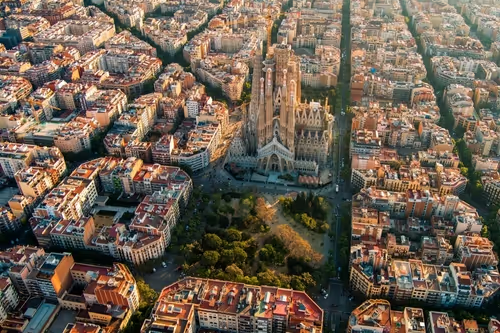
Several underground garages within walking distance of the basilica provide secure, 24-hour parking with modern amenities. The Sagrada Familia Parking facility sits just 100 meters from the entrance, offering extra-large spaces and direct metro access to lines L2 and L5. Another popular option, NN Valencia 3, is located 505 meters away with competitive rates. These underground facilities feature controlled entry, surveillance systems, and often climate control, making them a safer choice than street parking. Many offer elevator access directly to street level and allow online reservations through platforms.

Parking with electric vehicle charging

For eco-conscious travelers, several garages near the Sagrada Familia offer dedicated electric vehicle charging stations. These include both standard AC charging (3–7 kW) and fast DC charging (22–50 kW), with select locations even supporting Tesla Superchargers. Some facilities provide discounted rates for electric vehicles as part of Barcelona’s sustainability initiatives, but spaces are limited and should be reserved in advance. Charging typically incurs an additional fee on top of parking costs, and availability can vary during peak tourist seasons. The infrastructure is expanding as more visitors use electric rental cars, making it easier to explore the area sustainably.

Tourism and access to the Sagrada Familia

Visiting the Sagrada Familia today

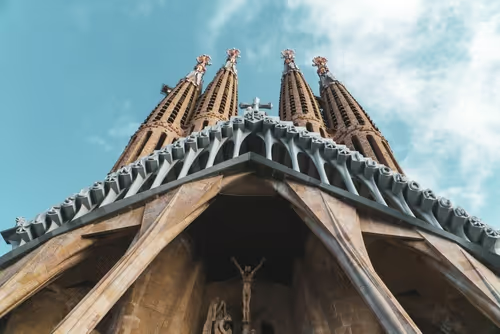
Antoni Gaudí envisioned the Sagrada Família as a combination of Gothic and Art Nouveau styles. Using a variety of organic forms, Gaudí aimed to create a structure that harmonized nature and architecture. It is open to tourists throughout the year, with different opening hours depending on the period. It is advisable to book your tickets online because the entries are scheduled in time slots.

For those wanting to dive deeper in the history of this amazing building and get the necessary context to really enjoy its finer details, consider taking a guided tour.

For individuals with mobility issues, the Sagrada Familia is fully enjoyable by people with any need, except for its towers, which require a good amount of steps to get back to ground floor.

Construction of the Sagrada Familia

Construction of the Sagrada Família began in 1882 under architect Francisco de Paula del Villar before Gaudí took over the project in 1883. Gaudí dedicated the latter part of his life solely to this monumental task. After his death in 1926, construction continued based on his detailed models and plans.

Significant milestones include the completion of the Nativity facade in 1935 and the progress made on the Passion facade in the late 20th century. By 2010, key elements like the nave and main altar had been completed, allowing for consecration by Pope Benedict XVI.

The construction of the Sagrada Familia has faced numerous challenges, including political turmoil, funding issues, and technical difficulties. The Spanish Civil War in the 1930s saw Gaudí's original plans and models largely destroyed, necessitating reconstruction based on surviving documents and interpretations by subsequent architects.

FAQs and tips

What are the options for parking near the Sagrada Familia?

Travelers have several parking options near the Sagrada Familia including paid street parking, private car parks, and limited free spaces. The basilica itself does not operate its own parking facility.

Private car parks offer the most convenient solution for visitors. These facilities provide secure spaces within walking distance of the attraction.

Street parking operates through Barcelona's zone system with Blue and Green zones requiring payment. Drivers can also find some residential areas with free parking further from the basilica.

Can I find free parking spots close to the Sagrada Familia?

Free parking exists in the area but requires more searching and walking. Most free spaces are located in residential neighborhoods several blocks away from the basilica.

The closest free parking typically involves a 10-15 minute walk to reach the Sagrada Familia. These spots fill up quickly, especially during peak tourist seasons.

Are there any dedicated car parks nearby the Sagrada Familia?

Multiple private car parks operate within walking distance of the basilica. Parking facilities near the Sagrada Família provide secure spaces with professional management.

One notable facility is located on Carrer Lepanto, positioned 200 meters from the basilica. This represents one of the largest car parks in the immediate area.

These dedicated facilities often offer daily rates and multi-day discounts. They provide covered parking and security features that street parking cannot match.

How does street parking work around the Sagrada Familia area?

Barcelona operates a color-coded parking zone system around the Sagrada Familia. Blue zones allow short-term parking for non-residents, while Green zones offer longer stays.

Drivers must pay through parking meters or mobile apps during designated hours. Payment typically runs from Monday through Friday, with some zones extending to Saturdays.

Time limits vary by zone, with Blue zones usually allowing 1-2 hours maximum. Green zones permit longer stays but cost more per hour.

Is it necessary to pre-book parking when visiting the Sagrada Familia?

Pre-booking parking provides peace of mind and guaranteed spaces, especially during busy periods. Many private car parks offer online reservation systems with advance booking options.

Visitors traveling during peak tourist season benefit most from advance reservations. Summer months and holidays see the highest demand for parking spaces.

Walk-in availability exists but becomes unpredictable during busy times. Pre-booking eliminates the stress of searching for parking while carrying luggage or managing time constraints.

What are the typical parking rates in the vicinity of the Sagrada Familia?

Street parking rates vary by zone type and duration. Blue zones typically charge between €2-4 per hour, while Green zones cost slightly more for extended stays.

Private car parks offer daily rates ranging from €15-25 for full-day parking. Many facilities provide bonus prices for multi-day stays of two or three days.

Monthly rates become available for longer visits, though most tourists opt for daily or hourly pricing. Rates fluctuate based on proximity to the basilica and facility amenities.