Sagrada Família Parkplätze

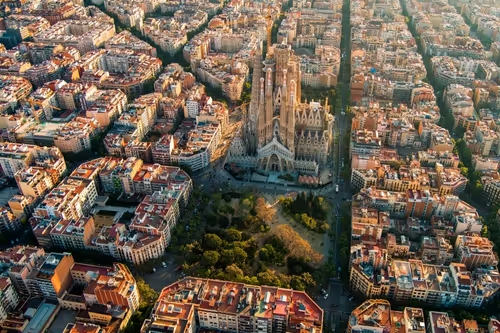
Wo man für die Sagrada Familia parken kann

Erforderliche Kleidung für die Einreise

Sagrada Familia requires guests to dress modestly. Both men and women should make sure shoulders are covered, which also means avoiding tank tops or sleeveless shirts. Shorts, skirts, or dresses must reach at least mid-thigh or fall below it.

It’s best to wear regular shirts, t-shirts, or blouses that do not show much skin. For the lower half, pants, capris, or long skirts are all fine if they are not too short. Children are also asked to follow these basic guidelines, although there is often a little more flexibility for young kids.

Proper shoes like sandals or sneakers are acceptable, but no bare feet are allowed.

Parken auf der Straße

Street parking around the Sagrada Familia operates under Barcelona’s Blue and Green Zone system. Blue Zones allow tourists to park for up to two hours with payment required during peak times, typically between 9:00 AM–2:00 PM and 4:00 PM–8:00 PM on weekdays. Green Zones prioritize local residents, charging higher rates for visitors and often limiting non-resident access. Prices range from around €1.30 to €2.85 per hour depending on the zone. Early mornings before 9:00 AM or late afternoons after 4:00 PM are the best times to find available spots. Accessible parking is available in designated Blue Zone spaces for mobility permit holders, who can exceed the standard two-hour limit. Payments can be made via parking meters, mobile apps, or SMS systems.

Unterirdische Parkmöglichkeiten

Several underground garages within walking distance of the basilica provide secure, 24-hour parking with modern amenities. The Sagrada Familia Parking facility sits just 100 meters from the entrance, offering extra-large spaces and direct metro access to lines L2 and L5. Another popular option, NN Valencia 3, is located 505 meters away with competitive rates. These underground facilities feature controlled entry, surveillance systems, and often climate control, making them a safer choice than street parking. Many offer elevator access directly to street level and allow online reservations through platforms.

Parkplatz mit Ladestation für Elektrofahrzeuge

For eco-conscious travelers, several garages near the Sagrada Familia offer dedicated electric vehicle charging stations. These include both standard AC charging (3–7 kW) and fast DC charging (22–50 kW), with select locations even supporting Tesla Superchargers. Some facilities provide discounted rates for electric vehicles as part of Barcelona’s sustainability initiatives, but spaces are limited and should be reserved in advance. Charging typically incurs an additional fee on top of parking costs, and availability can vary during peak tourist seasons. The infrastructure is expanding as more visitors use electric rental cars, making it easier to explore the area sustainably.

Tourismus und Zugang zur Sagrada Familia

Besuch der Sagrada Familia heute

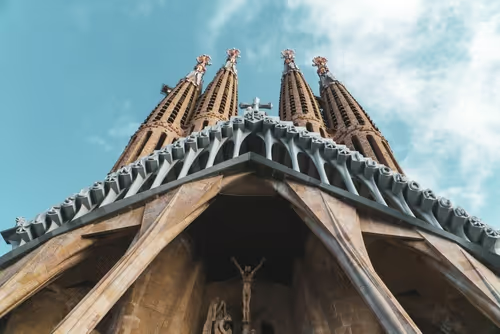
Antoni Gaudí stellte sich die Sagrada Família als eine Kombination aus Gotik und Jugendstil vor. Mit einer Vielzahl von organischen Formen wollte Gaudí ein Bauwerk schaffen, das Natur und Architektur in Einklang bringt. Die Família kann das ganze Jahr über besichtigt werden, wobei die Öffnungszeiten von der jeweiligen Jahreszeit abhängen. Es ist ratsam, die Eintrittskarten online zu buchen, da der Eintritt in Zeitfenstern erfolgt.

Wer tiefer in die Geschichte dieses erstaunlichen Gebäudes eintauchen und die notwendigen Zusammenhänge verstehen möchte, um seine Feinheiten wirklich genießen zu können, sollte eine geführte Tour in Betracht ziehen.

Für Menschen mit Mobilitätsproblemen ist die Sagrada Familia in jeder Hinsicht geeignet, mit Ausnahme der Türme, die eine ganze Reihe von Stufen erfordern, um wieder ins Erdgeschoss zu gelangen.

Bau der Sagrada Familia

Die Bauarbeiten an der Sagrada Família begannen 1882 unter dem Architekten Francisco de Paula del Villar, bevor Gaudí 1883 das Projekt übernahm. Gaudí widmete den letzten Teil seines Lebens ausschließlich dieser monumentalen Aufgabe. Nach seinem Tod im Jahr 1926 wurde der Bau auf der Grundlage seiner detaillierten Modelle und Pläne fortgesetzt.

Zu den bedeutenden Meilensteinen gehören die Fertigstellung der Geburtsfassade im Jahr 1935 und die Fortschritte an der Passionsfassade Ende des 20. Jahrhundert. 2010 waren Schlüsselelemente wie das Kirchenschiff und der Hauptaltar fertiggestellt und konnten von Papst Benedikt XVI. eingeweiht werden.

Der Bau der Sagrada Familia war mit zahlreichen Herausforderungen verbunden, darunter politische Unruhen, Finanzierungsprobleme und technische Schwierigkeiten. Während des Spanischen Bürgerkriegs in den 1930er Jahren wurden Gaudís Originalpläne und -modelle weitgehend zerstört, so dass eine Rekonstruktion auf der Grundlage überlieferter Dokumente und Interpretationen späterer Architekten erforderlich wurde.

FAQs und Tipps

Welche Parkmöglichkeiten gibt es in der Nähe der Sagrada Familia?

Travelers have several parking options near the Sagrada Familia including paid street parking, private car parks, and limited free spaces. The basilica itself does not operate its own parking facility.

Private car parks offer the most convenient solution for visitors. These facilities provide secure spaces within walking distance of the attraction.

Street parking operates through Barcelona's zone system with Blue and Green zones requiring payment. Drivers can also find some residential areas with free parking further from the basilica.

Kann ich in der Nähe der Sagrada Familia kostenlose Parkplätze finden?

In der Umgebung gibt es kostenlose Parkplätze, aber man muss mehr suchen und laufen. Die meisten freien Parkplätze befinden sich in Wohnvierteln, die mehrere Blocks von der Basilika entfernt sind.

Der nächstgelegene kostenlose Parkplatz erfordert in der Regel einen 10- bis 15-minütigen Fußmarsch bis zur Sagrada Familia. Diese Plätze füllen sich schnell, vor allem während der touristischen Hochsaison.

Gibt es spezielle Parkplätze in der Nähe der Sagrada Familia?

Multiple private car parks operate within walking distance of the basilica. Parking facilities near the Sagrada Família provide secure spaces with professional management.

One notable facility is located on Carrer Lepanto, positioned 200 meters from the basilica. This represents one of the largest car parks in the immediate area.

These dedicated facilities often offer daily rates and multi-day discounts. They provide covered parking and security features that street parking cannot match.

Wie funktioniert das Parken auf der Straße in der Umgebung der Sagrada Familia?

In Barcelona gibt es rund um die Sagrada Familia ein System farblich gekennzeichneter Parkzonen. Blaue Zonen erlauben Kurzzeitparken für Nicht-Anwohner, während grüne Zonen längere Aufenthalte ermöglichen.

Autofahrer müssen während der festgelegten Zeiten über Parkuhren oder mobile Apps bezahlen. Die Bezahlung erfolgt in der Regel von Montag bis Freitag, in einigen Zonen auch samstags.

Die Zeitlimits variieren je nach Zone, wobei in den blauen Zonen in der Regel maximal 1-2 Stunden erlaubt sind. Grüne Zonen erlauben längere Aufenthalte, kosten aber mehr pro Stunde.

Muss man beim Besuch der Sagrada Familia einen Parkplatz im Voraus reservieren?

Pre-booking parking provides peace of mind and guaranteed spaces, especially during busy periods. Many private car parks offer online reservation systems with advance booking options.

Visitors traveling during peak tourist season benefit most from advance reservations. Summer months and holidays see the highest demand for parking spaces.

Walk-in availability exists but becomes unpredictable during busy times. Pre-booking eliminates the stress of searching for parking while carrying luggage or managing time constraints.

Wie hoch sind die üblichen Parkgebühren in der Nähe der Sagrada Familia?

Street parking rates vary by zone type and duration. Blue zones typically charge between €2-4 per hour, while Green zones cost slightly more for extended stays.

Private car parks offer daily rates ranging from €15-25 for full-day parking. Many facilities provide bonus prices for multi-day stays of two or three days.

Monthly rates become available for longer visits, though most tourists opt for daily or hourly pricing. Rates fluctuate based on proximity to the basilica and facility amenities.