Sagrada Familia Towers

Passion Tower or Nativity Tower?

General differences

The two towers are quite distinct, each with its own theme, height, and perspective of Barcelona. The Nativity Tower is shorter and overlooks east part of the city, with views stretching out to the sea. In contrast, the taller Passion Tower provides a sweeping view of the entire city and the hills surrounding it, but it also offers beautiful views of the sea thanks to its height.

The views

From the Nativity Tower, visitors can see the Sagrada Familia's detailed sculptures up close, as well as the eastern part of the city, up to the sea. The Passion Tower provides a wider view of Barcelona, extending toward the inner hills and showing the city's overall layout, while still gifting beautiful views of the sea. While both towers offer good perspectives, the Nativity Tower allows for a clearer look at the architectural details, whereas the height of the Passion Tower gives a broader sense of the basilica and its surroundings.

Accessibility

The towers of the Sagrada Familia differ noticeably in accessibility. The Nativity Tower is shorter and generally easier to climb, with fewer steps and a relatively wide staircase, making the ascent less strenuous. The Passion Tower is taller and requires a longer climb, with sections of a narrow, winding spiral staircase that can feel tight in places. Both towers have elevators that cover part of the way up, but visitors should be prepared for a moderate to challenging climb, particularly on the Passion Tower. For families with children or visitors with limited mobility, the Nativity Tower is generally easier to manage, while the Passion Tower may be more difficult due to its height and narrower stairways.

Please note that children under 6 and people with a wheelchair are forbidden from visiting the towers due to safety reasons.

Available Tickets

Entry ticket with audio guide and optional towers
  • Fast track access
  • Audio guide app
  • Optional access to the towers
  • Free cancellation
★★★★½ 4.7 (60.0k+ reviews) · Headout
Sagrada Familia Fast-Track Guided Tour with Towers Access
  • 2-hours guided tour with a live professional guide
  • Fast track access
  • Access to the Sagrada Familia Museum and one tower
  • Free cancellation
★★★★☆ 4.4 (2.5k+ reviews) · Headout

The towers of the Sagrada Familia

Nativity Tower

The Nativity Tower, completed between 1894 and 1930, is the oldest and most ornate of the Sagrada Família's towers. Antoni Gaudí designed it to represent the birth of Jesus, incorporating intricate sculptures and naturalistic elements.

Notably, it is the only tower Gaudí saw finished during his lifetime. The tower stands at 98 meters and is adorned with four spires, each dedicated to a saint: Matthias, Barnabas, Jude the Apostle, and Simon the Zealot.

The façade beneath the tower features three porticos symbolizing the theological virtues of Faith, Hope, and Charity, with columns topped by turtles and chameleons representing time and change. This façade faces the rising sun, symbolizing the birth of Christ.

The Nativity Tower's design emphasizes organic forms and detailed ornamentation, reflecting Gaudí's devotion to naturalism and his intention to create a harmonious blend of architecture and nature.

Passion Tower

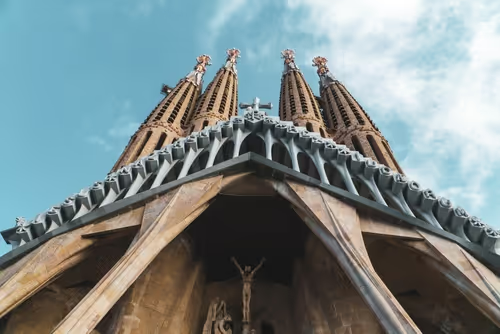
In contrast, the Passion Tower, constructed between 1954 and 1976, embodies a starkly different aesthetic, focusing on the suffering and death of Christ.

Following Gaudí's death, architects adhered to his plans, resulting in a more austere and angular design. The tower reaches a height of 107 meters and is crowned with a cross, symbolizing the crucifixion.

Its façade is characterized by sharp lines and skeletal forms, conveying the severity of Christ's passion. The Passion Tower's design includes elements such as inclined columns resembling strained muscles and a pyramidal pediment made up of eighteen bone-shaped columns.

The tower's four spires are dedicated to apostles James, Thomas, Philip, and Bartholomew, each adorned with sculptures by Josep Maria Subirachs. This façade faces the setting sun, symbolizing the death of Christ.

FAQs and tips

What differences can I expect when choosing between the Nativity and Passion towers?

The Passion Tower stands 9 meters taller than the Nativity Tower, reaching 107 meters compared to the Nativity's 98 meters. This height difference creates noticeably different viewing angles and perspectives of Barcelona.

The Nativity Tower offers views of the eastern side of Barcelona, including the Mediterranean coastline and the famous grid system of the Eixample neighborhood. Visitors can spot Gaudí-designed doves overlooking Plaça de Gaudí from this vantage point.

The Passion Tower provides western views featuring the foothills of Tibidabo Mountain, Montjuïc Mountain, and Barcelona's Old City including the Gothic Quarter and El Born. The tower also overlooks the beautiful gardens of Sagrada Família Square below but, being higher, it offers a beautiful view of the entire city.

Are the views from the Sagrada Familia towers worth the visit and the price?

Tower visits provide panoramic views of Barcelona that showcase the city's unique grid system and major landmarks. The experience includes audio guides and close-up views of the basilica's architectural details.

However, some visitors find the views partially obstructed and prefer other Barcelona viewpoints like Park Güell. The tower experience focuses more on architectural appreciation than pure sightseeing.

What should I consider before deciding to climb the Sagrada Familia towers?

Children under six and visitors with mobility issues cannot access the towers due to mandatory stair descent requirements. The spiral stairwells are cramped and not suitable for claustrophobic individuals.

Elevator access goes up only, while descent requires navigating narrow spiral staircases. This creates physical demands that some visitors cannot accommodate safely.

Weather conditions affect tower access, with closures during high winds for safety reasons. Booking well in advance is essential as tower visits are capped and frequently sell out.

How many steps are there to climb in the towers of the Sagrada Familia, and is there an elevator available?

Elevators take visitors up to the viewing platforms, but descent is mandatory via spiral staircases. The Passion Tower features elevator access with stair descent only.

The Nativity Tower requires stair navigation for both ascent and descent in some sections. This makes it less accessible for visitors with mobility concerns.

Exact step counts vary by tower and access route, but the spiral staircases are narrow and require careful navigation. The descent involves continuous spiral stairs that can be challenging for some visitors.

What are the differences in the views from the Nativity and Passion towers?

The Nativity Tower provides eastern views including the Mediterranean Sea, Costa Brava mountains, and Badalona's three smoke stacks. Morning visits offer optimal lighting conditions for this tower's orientation.

The Passion Tower offers western perspectives featuring Tibidabo Mountain foothills, the Old City districts, and Montjuïc Mountain. Afternoon visits provide better lighting for photography from this tower.

Both towers showcase the Eixample grid system, but from different angles. The Passion Tower's additional height provides broader panoramic coverage of the cityscape.

What are the unique features of each tower at the Sagrada Familia?

The Nativity Tower represents Gaudí's original design work and features his authentic architectural touches. Visitors experience the closest connection to the master architect's personal vision and craftsmanship.

The Passion Tower incorporates newer construction features and modern accessibility improvements. Its greater height and updated facilities provide enhanced viewing experiences.

Each tower connects to different façades with distinct artistic themes - the Nativity façade celebrates Christ's birth while the Passion façade depicts his crucifixion. The towers reflect these thematic differences in their decorative elements and symbolic details.